
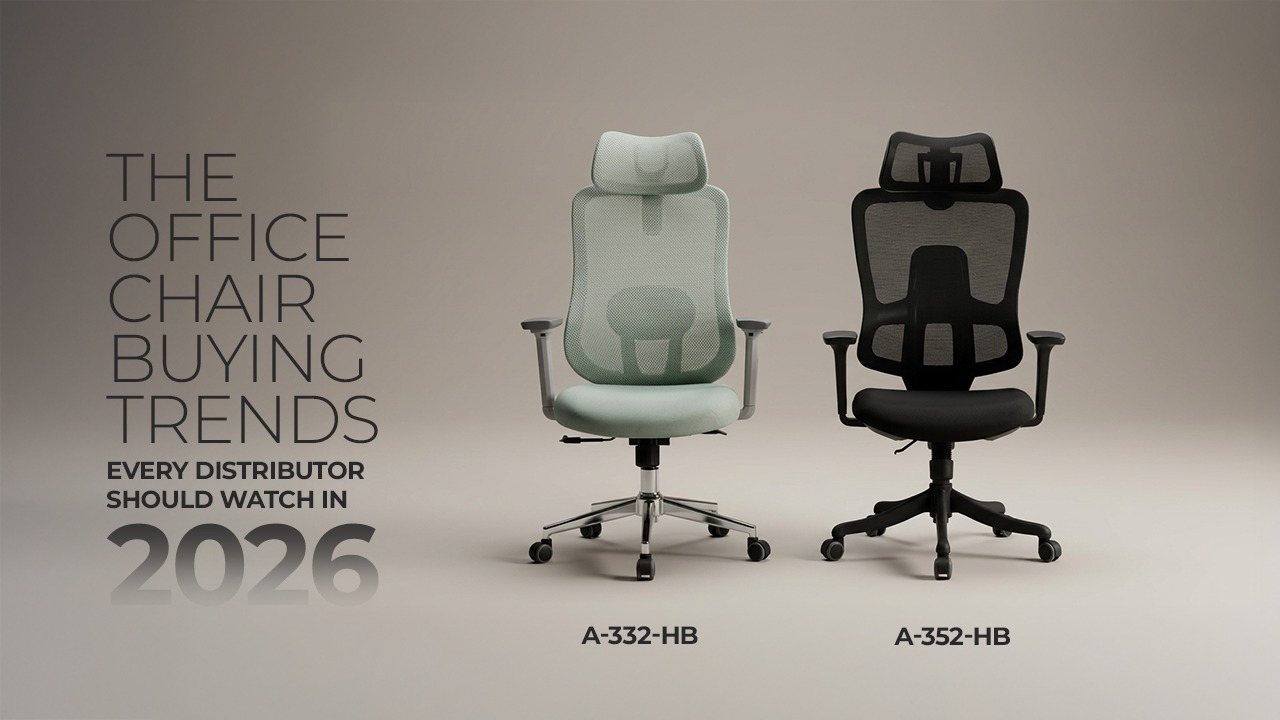
Office Chair Trends 2026: 5 Key Trends for Distributors
Introduction
The office furniture market continues to evolve as workplaces adapt to changing employee expectations, hybrid work models, and growing demand for ergonomic solutions. For distributors, understanding the office chair trends 2026 can help them make better purchasing decisions, manage inventory, and meet changing customer expectations.
In 2026, businesses are looking beyond basic functionality when selecting office chairs. Comfort, flexibility, durability, aesthetics, and long-term value are becoming increasingly important purchasing factors. Understanding these trends can help distributors select products that remain relevant across different markets and customer segments.
Here are five important office chair trends distributors should consider when planning their product range for 2026.
1. Growing Demand for Ergonomic Seating
Employee comfort and workplace well-being continue to influence furniture purchasing decisions. Businesses are increasingly looking for ergonomic office chairs that provide better support during long working hours.
Features such as adjustable lumbar support, customizable armrests, headrests, seat-height adjustment, and flexible back support are becoming important considerations for buyers.
For distributors, offering a range of ergonomic seating options can help address the needs of offices, co-working spaces, home offices, and other professional environments.
The focus is not simply on adding more features. Buyers are increasingly looking for chairs that combine practical ergonomics with durability, comfort, and competitive pricing.
2. Hybrid Work Is Influencing Purchasing Decisions
Hybrid work has changed how businesses plan and furnish their workspaces. Companies are looking for versatile seating solutions that can adapt to different working environments while maintaining comfort and functionality.
Office chairs are now being purchased for corporate offices, co-working spaces, meeting rooms, home offices, and flexible work areas. This creates opportunities for distributors to offer products that can serve multiple applications.
Chairs that are easy to use, comfortable for extended periods, and suitable for different workspace designs can provide greater flexibility for both distributors and their customers.
3. Design and Aesthetics Matter More Than Ever
Office chairs are no longer viewed solely as functional furniture. Modern workplaces place greater emphasis on creating professional and visually appealing environments.
Clean lines, contemporary styling, premium finishes, neutral colours, and attractive design details are becoming important purchasing considerations.
This is one of the key office chair trends 2026 that distributors should consider when developing their product portfolios. Customers increasingly want chairs that complement their interior design rather than simply serving a functional purpose.
Offering a combination of modern aesthetics and practical functionality can help distributors address the requirements of different business environments.
4. Durability and Long-Term Value Are Key Priorities
Businesses continue to evaluate furniture purchases based on long-term value. While price remains an important factor, buyers also want products that can deliver reliable performance over time.
Office chairs with strong construction, durable materials, consistent manufacturing quality, and reliable components can provide greater value to customers.
For distributors, product durability can also influence repeat purchases and customer relationships. A product that performs consistently can help reduce complaints, replacements, and unexpected service issues.
Instead of focusing only on the lowest purchase price, distributors can evaluate the overall value of a chair, including its quality, expected lifespan, specifications, and after-sales requirements.
5. Faster Availability Is Becoming a Competitive Advantage
Customers increasingly expect reliable product availability and predictable delivery timelines. Delays can affect office installations, project schedules, and inventory planning.
For distributors, working with manufacturers that have reliable production capabilities and consistent supply can make it easier to respond to customer requirements.
Production capacity, lead times, packaging, quality control, and shipping arrangements should therefore be considered when evaluating a furniture manufacturing partner.
A dependable supply chain can help distributors maintain stock levels, fulfil orders more efficiently, and build stronger relationships with their customers.
What These Trends Mean for Distributors
The office chair trends 2026 point towards a market where buyers are looking for more than basic seating. Comfort, ergonomic functionality, modern design, durability, flexibility, and reliable availability are becoming increasingly important factors.
For distributors, this means product selection should be based on both current demand and longer-term market requirements.
Instead of relying on a single type of office chair, distributors can consider building a balanced portfolio with different designs, features, price points, and applications. This can help them serve a wider customer base while adapting to changing purchasing preferences.
Conclusion
The office chair trends 2026 are being shaped by ergonomic requirements, hybrid work environments, modern workplace aesthetics, durability, and dependable availability. Distributors who understand these shifts can make more informed decisions when selecting products and planning their inventory.
At Sitrite, we manufacture office seating solutions designed to combine comfort, durability, contemporary design, and reliable production. With bulk-order capabilities and a focus on consistent quality, Sitrite supports distributors, wholesalers, retailers, and other B2B buyers looking for dependable office chair solutions.
Looking for office chairs for your market?
Contact Sitrite to discuss your product requirements and bulk-order needs.
Email: sales2@sitritechairs.com