
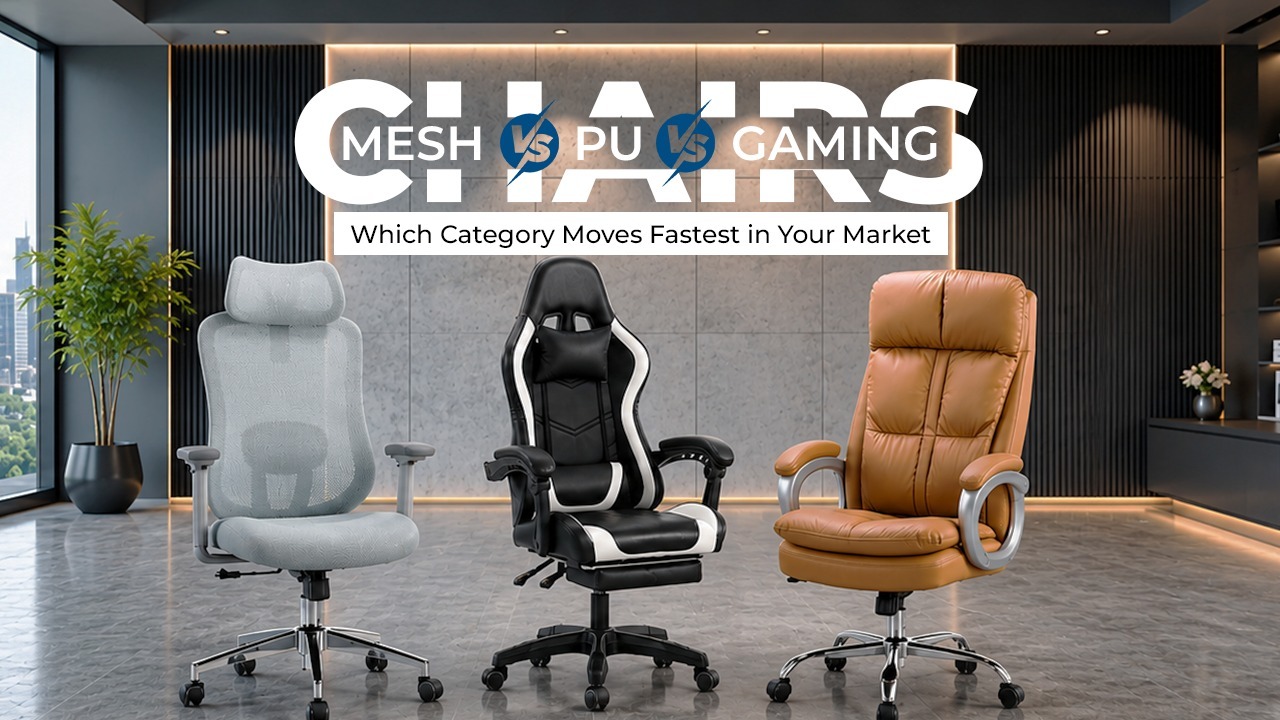
Mesh Chairs, PU Chairs & Gaming Chairs: What Should Retailers Stock?
Introduction
Mesh chairs have become an important category in the office furniture market, but they are not the only option available to retailers. PU chairs and gaming chairs also serve different customer segments and purchasing requirements.
Every office furniture retailer wants to stock products that sell consistently and deliver healthy margins. However, not every chair category performs the same way in every market. Customer preferences are influenced by workplace trends, budgets, comfort requirements, design preferences, and intended use.
The three popular categories are mesh chairs, PU chairs, and gaming chairs. Understanding the strengths of each can help retailers make smarter inventory decisions and create a product mix that serves multiple customer segments.
1. Mesh Chairs: The Everyday Bestseller
Mesh chairs have become a popular choice for offices because they combine comfort, practicality, and modern design. Their breathable backrests allow better airflow, making them suitable for long working hours and warmer environments.
Businesses, startups, co-working spaces, and home office users often choose mesh chairs because of their ergonomic features and contemporary appearance. Their wide range of price points also makes them suitable for different budgets.
For retailers serving corporate offices and professionals, mesh chairs can be an important part of their inventory. Models with adjustable armrests, lumbar support, headrests, and other ergonomic features can cater to customers looking for additional comfort and functionality.
2. PU Chairs: Premium Look with Lasting Appeal
PU chairs are known for their smooth finish, cushioning, and executive appearance. They are commonly selected for cabins, conference rooms, management offices, and premium workspaces where appearance is an important purchasing factor.
While PU chairs may not always sell in the same volume as mesh chairs, they can appeal to customers looking for a more premium seating experience.
Customers purchasing executive office furniture may prioritize cushioning, sophisticated styling, and a professional appearance. For retailers, maintaining a selection of PU chairs can therefore help address the requirements of premium buyers.
3. Gaming Chairs: A Growing Niche
Gaming chairs have expanded beyond the traditional gaming audience. Content creators, streamers, students, and some remote professionals are increasingly interested in gaming-style seating because of its distinctive design and supportive features.
However, demand for gaming chairs can vary significantly between markets. Areas with a younger customer base or strong gaming communities may offer greater opportunities for this category.
Retailers should evaluate their local customer profile before investing heavily in gaming chair inventory. Understanding demand can help avoid excess stock and ensure that product selection matches actual customer requirements.
4. Match Your Inventory to Your Customers
The right chair category depends largely on who your customers are.
- Corporate offices may prefer ergonomic mesh chairs.
- Business owners and executives may look for premium PU chairs.
- Gamers and content creators may be interested in gaming chairs.
- Home office users may consider both mesh and ergonomic seating.
- Budget-conscious buyers may focus heavily on price and essential features.
Understanding your target customer allows you to maintain a product mix that matches actual market demand.
Instead of assuming that one chair category will work everywhere, retailers can analyse their sales data, customer enquiries, price preferences, and repeat orders to identify which products deserve more inventory.
5. Offer Variety to Increase Sales
Rather than relying on a single chair category, retailers can maintain a balanced range of products. Displaying mesh chairs, PU chairs, and gaming chairs together allows customers to compare design, comfort, features, and pricing.
A diversified product portfolio can also help retailers serve multiple customer segments. A customer who does not find the right option in one category may find a suitable alternative in another.
For B2B buyers, offering multiple chair types can also make it easier to serve different requirements across offices, executive spaces, home offices, and specialised environments.
How Should Retailers Decide What to Stock?
Before placing a bulk order, retailers should consider several factors:
- Customer demographics
- Local market demand
- Average selling price
- Available storage space
- Product margins
- Repeat purchase potential
- Supplier lead time
- Minimum order quantity
- Product quality and durability
This approach allows retailers to make inventory decisions based on business data rather than simply following popular trends.
Conclusion
Mesh chairs, PU chairs, and gaming chairs each serve different customer needs. Mesh chairs offer a combination of comfort, practicality, and versatility. PU chairs can appeal to customers looking for a premium executive appearance, while gaming chairs provide an option for younger and specialised customer segments.
For retailers, the right strategy is not necessarily to choose one category over another. Building a balanced product portfolio based on customer demand, pricing, margins, and market requirements can create more opportunities across different segments.
At Sitrite, we manufacture a wide range of high-quality mesh, PU, ergonomic, executive, and gaming chairs designed to meet different market requirements. With reliable manufacturing, consistent quality, and bulk-order capabilities, Sitrite supports retailers, wholesalers, and distributors looking to expand their seating portfolio.
Looking for chairs for your market?
Contact Sitrite to discuss your product requirements and bulk-order needs.
Email: sales2@sitritechairs.com