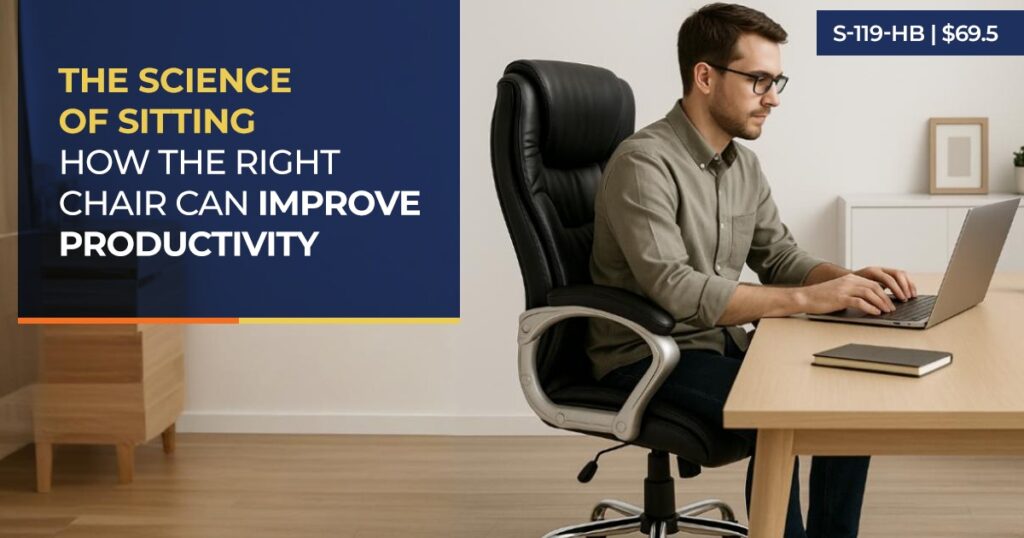
In today’s digital age, where most of us spend a major portion of our day seated in front of screens, the importance of a good chair often goes unnoticed. Yet, the science of sitting — and how the right chair supports it — plays a critical role in boosting not only comfort but also workplace productivity.
Why Sitting Matters More Than You Think
When we sit for extended hours, our posture, blood flow, and energy levels are constantly being tested. A poorly designed chair can lead to discomfort, fatigue, and chronic pain, all of which silently reduce focus and work performance.
On the other hand, a well-designed ergonomic chair doesn’t just make sitting comfortable — it creates a foundation for a healthier and more efficient workday.
What Is Ergonomics, Really?
It’s about designing tools, furniture, and systems that fit the human body’s natural movements and needs.
- An ergonomic chair is built not just for aesthetics but to:
- Support your spine’s natural curvature
- Promote healthy sitting posture
- Reduce stress on pressure points
- Encourage subtle movements while seated
Let’s break down the science-backed features that make a chair truly ergonomic.
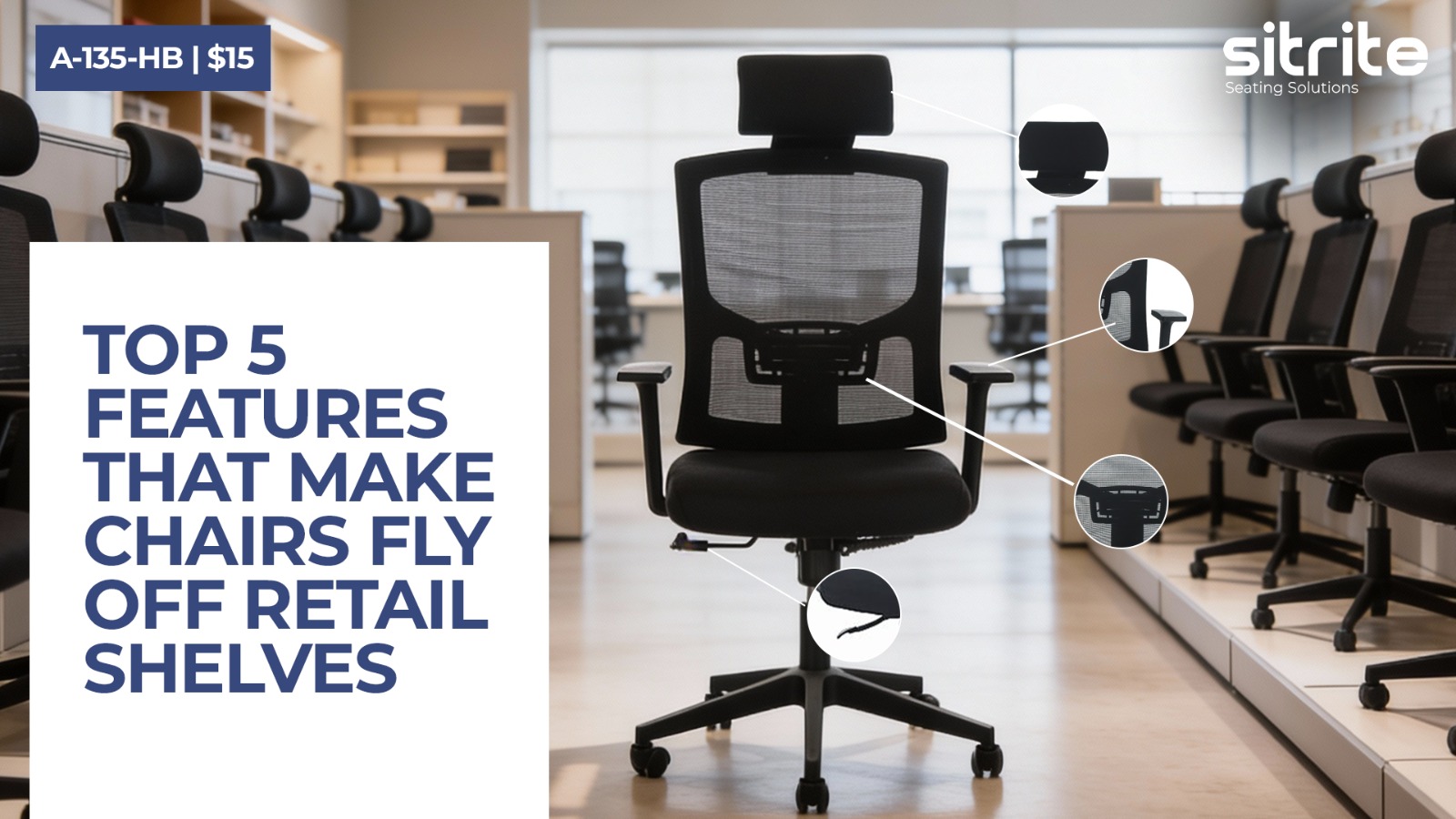
- Adjustable Seat Height
A height-adjustable chair lets your feet rest flat and keeps your knees at a natural 90-degree angle. This helps ease pressure on your legs and supports a healthier sitting posture.
- Lumbar Support
Your lower back needs specific support to maintain its natural inward curve. A chair designed with targeted lumbar reinforcement helps preserve this alignment and prevents slouching or stress on the spine.
- Proper Seat Depth and Width
A seat that’s too short won’t support your thighs properly, while one that’s too deep might cut off circulation behind your knees. The ideal seat allows a small gap (around 2–4 inches) between the edge of the seat and the back of your knees.
- Supportive Armrests
When armrests can be adjusted according to your sitting position, they allow your forearms to rest easily, which helps reduce the load on your upper arms, shoulders, and neck muscles.
- Tilt and Recline Functionality
Movement is key even while sitting. Chairs with tilt and recline features encourage small shifts in posture, reducing stiffness and improving blood flow. A reclining position can also relieve pressure on the spine during short breaks.
Sitting and Productivity: The Hidden Connection
So how exactly does the right chair improve productivity?
- Reduced Fatigue
Discomfort drains energy. When your body is in constant pain or tension, your focus shifts from tasks to trying to get comfortable. Ergonomic chairs help reduce tiredness by naturally supporting your posture during extended sitting.
- Better Focus
Well-designed chairs help improve blood flow and oxygen delivery, helping you stay mentally alert and focused during work hours. It supports better breathing, helping improve concentration and mental clarity.
- Fewer Breaks
While it’s true that movement is beneficial, constantly needing to leave your chair due to discomfort can disrupt your work rhythm and reduce focus.
- Long-Term Health
Consistent use of supportive seating lowers the risk of long-term issues like chronic back pain, poor circulation, or even varicose veins. Healthy employees are more consistent, motivated, and productive.
The Employer’s Advantage
Buying high-quality ergonomic chairs for employees isn’t just about comfort or appearance — it’s a well-thought-out, long-term business investment.
Businesses that prioritize ergonomics see:
- Lower absenteeism
- Higher employee satisfaction
- Fewer complaints of discomfort or injury
- A more professional and productive work environment
- A small investment in quality chairs can deliver significant returns in the form of better morale, reduced medical costs, and increased output.
Final Thoughts
The chair you sit on might not seem like a productivity tool, but science proves otherwise. The way we sit — and what we sit on — directly influences our performance, health, and motivation. Whether you’re an employer looking to optimize your team’s output, or a professional working from home, upgrading your seating should be a top priority.
Ready to Sit Smarter?
Back pain shouldn’t be the reason you lose focus or slow down. Make the switch to ergonomic chairs that work with your body, not against it.
Choose smarter. Sit better. Work sharper.