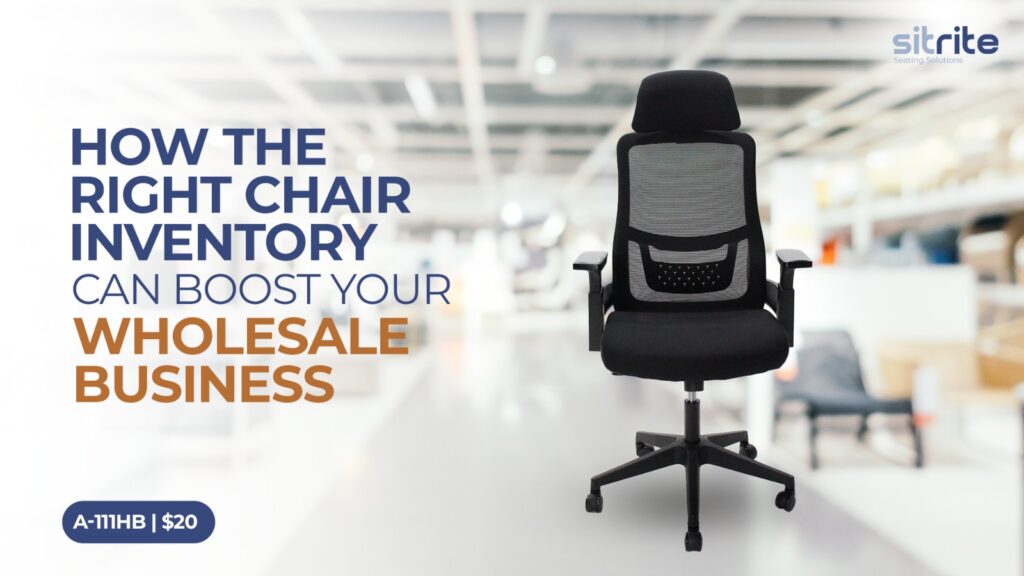
In the furniture trade, wholesalers don’t just sell products; they power retail businesses. Among all furniture categories, chairs remain one of the fastest-moving, most frequently reordered items. From dining and office seating to café and utility chairs, demand stays constant across markets. For wholesalers, having the right chair inventory isn’t optional, it’s a growth strategy.
A well-planned chair inventory directly influences sales consistency, retailer trust, and long-term profitability.
1. Inventory That Matches Trade Demand
Wholesale success depends on understanding what actually sells. Retailers look for chairs that balance design, durability, and price, products that move quickly off their showroom floors. When your inventory is aligned with market demand, retailers don’t hesitate to place repeat orders.
Stocking a focused mix of best-selling models, versatile finishes, and standard price ranges helps wholesalers cater to multiple retail formats without overextending their inventory. This reduces unsold stock and improves overall inventory turnover.
2. Faster Fulfillment Builds Stronger Partnerships
In the wholesale ecosystem, speed matters. Retailers rely on suppliers who can fulfill bulk orders on time, especially during peak seasons. Maintaining a ready inventory allows wholesalers to respond quickly, reducing lead times and eliminating supply gaps.
When retailers know they can depend on your stock availability, your business becomes their preferred sourcing partner. This consistency strengthens long-term relationships and increases order frequency without the need for aggressive selling.
3. Better Inventory Means Better Margins
The right chair inventory protects your margins. Products with proven demand reduce the risk of overstocking and discount-driven losses. Instead of pushing slow-moving designs, wholesalers can focus on chairs that deliver steady sales and predictable returns.
With a refined inventory strategy, procurement decisions become smarter. You buy in the right quantities, manage storage efficiently, and avoid unnecessary capital lock-in, allowing your business to scale sustainably.
4. Helping Retailers Expand Their Offerings
Retailers prefer wholesalers who can support their growth. When your chair inventory includes multiple categories, dining, office, visitor, café, and stackable seating, you enable retailers to serve diverse customer needs through a single supplier.
This convenience increases average order value and positions your wholesale business as a one-stop supply solution. Over time, this makes your brand harder to replace and easier to grow with.
5. Consistency in Quality and Design
Trade buyers value consistency. Retailers need assurance that a reordered model will match the original in quality, finish, and structure. A standardized chair inventory ensures uniformity across batches, helping retailers maintain showroom consistency and customer trust.
Reliable quality reduces returns, complaints, and after-sales issues, saving time and strengthening credibility on both ends of the supply chain.
6. Inventory as a Competitive Advantage
In today’s competitive wholesale market, inventory is more than stock’s positioning. Wholesalers who invest in the right chair assortment gain better market visibility, stronger buyer loyalty, and higher repeat business.
A dependable inventory allows you to adapt to trends, handle bulk demand, and expand into new markets with confidence. Over time, this approach transforms your wholesale operation into a stable, growth-driven supply system.
Conclusion
The right chair inventory doesn’t just fill warehouses, it fuels business momentum. For wholesalers, it drives faster sales, healthier margins, and stronger retail partnerships. When your inventory works as hard as your sales team, growth follows naturally.
For catalogs & orders:
sales2@sitritechairs.com